
The Sweet Story of Uzbek Chak Chak: History and Cultural Heart of a Beloved Dessert
This golden fried dough treat feels like home with every bite. Pieces stick together under fragrant honey. The traditional Central Asian sweet unites people across generations. It offers more than dessert. It carries family warmth, true hospitality, and echoes of nomadic life on the steppes. Here is where this Uzbek favorite comes from and why it still matters.
Ancient Roots Along the Silk Road and Nomadic Trails
Chak-chak began long before modern borders. Turkic nomads created it centuries ago across Central Asia. They needed lasting foods for long journeys. Wheat flour, eggs, and honey met that need. These ingredients traveled well and turned into something both filling and festive.The treat spread among Uzbeks, Tatars, Kazakhs, and related groups. Many link its famous forms to Tatar traditions. Uzbekistan made chak chak its own. Cooks shape the dough into small half-balls, thin noodles, or light flakes. They fry it crisp and golden, then coat it in warm honey syrup. Nuts or dried fruits sometimes join the mix for extra taste and crunch.The name and method show deep continuity. Similar honey-fried sweets appear in early Turkic and Volga Bulgar stories. Food traditions moved and changed along trade routes and migration paths. A practical nomadic snack slowly became a celebration centerpiece.
A Symbol of Hospitality, Unity, and Celebration in Uzbek Life
In Uzbekistan, this honey treat means far more than sweetness. Its golden color stands for the sun’s warmth. The pieces that cling in a mound or tower represent community and friendship. People bring a large version to the table so everyone can share. Guests break off pieces and enjoy them together.Weddings highlight it most of all. The bride’s family often prepares a tall tower or mound. They sometimes decorate it with candies or nuts. Guests break pieces and share them. This act turns eating into a joyful blessing for the couple. The dessert also appears at family gatherings, Eid holidays, and Navruz spring celebrations. Sweets help mark renewal and hope.Making it often involves the whole family. Younger hands roll or cut the dough. Elders handle the frying and the careful honey mix. This shared work strengthens family ties. It also passes skills from one generation to the next. The smell of frying dough and melting honey still signals a special occasion in many homes.
Why Chak Chak Continues to Matter Today
Modern Uzbekistan changes fast, yet chak chak stays strong. You find it in bazaars, packed as souvenirs, or freshly made at home for guests. Travelers remember it as one of the country’s most lasting flavors — sticky, crunchy, and rich with real honey.Its power comes from the values it holds. Hospitality stands at the center of Uzbek life. Offering chak chak tells guests they are welcome. The dessert links people to their nomadic past. At the same time, it celebrates today’s family-focused culture. In a busy world, a piece of chak chak feels real and shared.Whether it rises as a wedding tower or sits simply with tea among friends, Uzbek chak chak keeps telling its story. It speaks of strength, generosity, and the quiet joy of sweetness passed around. This is more than a traditional dessert. It lives as cultural memory, still golden and sticky with meaning.
Discover Traditional Uzbek Recipes Discover Traditional Recipes from Asia You may also like this: Polish Faworki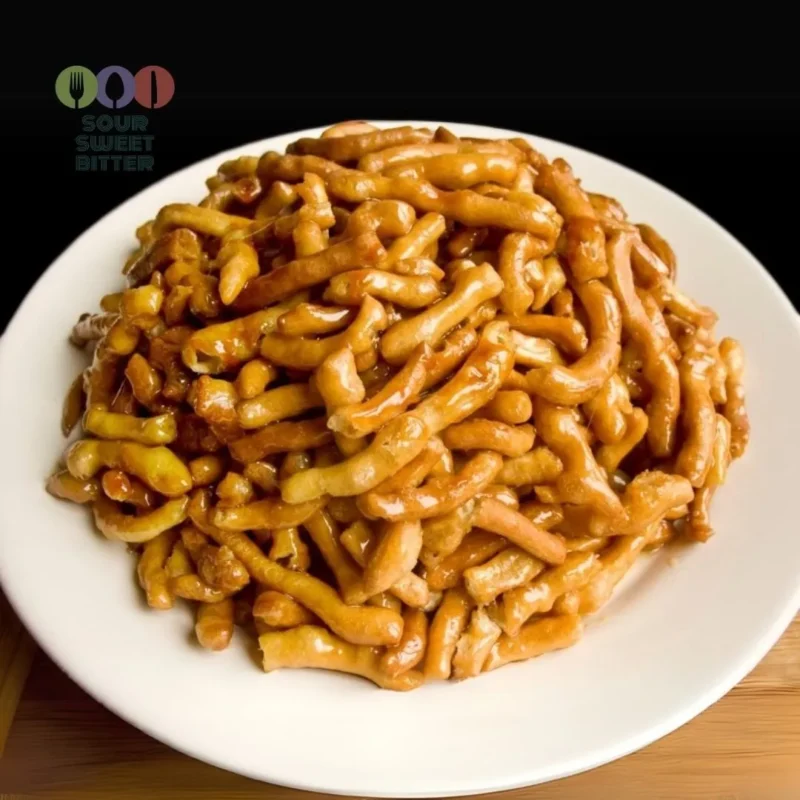
Uzbek Chak-Chak
Ingredients
For the dough:
Instructions
- Beat the eggs in a bowl and beat with a mixer for 5 minutes.
- Then add salt and soda and beat again.
- Add flour and knead a medium-hard dough.
- Cover the dough with cling film and set aside for 30 minutes.
- Take the dough and roll it out to a thickness of 2 mm.
- Mix melted butter and margarine and spread it on only half of the rolled out dough.
- Fold the dough in half, that is, fold the ungreased half onto the buttered side.
- Cut the dough into 3 cm thick strips.
- Then cut them into 1.5 cm wide strips.
- Heat the oil in a pan.
- Add the dough little by little and fry, stirring with a spatula during frying so that the pieces curl up.
- Put the sugar and water in a bowl and boil over low heat for 30 minutes.
- When the mixture thickens slightly, add the honey and lemon juice and mix well.
- As soon as it starts to boil, remove from heat immediately.
- Put the chak-chak in a bowl, pour the mixture over it and mix well.
- Arrange them neatly on a plate.
- Your traditional Chak-Chak is ready. Yoqimli ishtaha!