
Kumpir: The Irresistible Turkish Stuffed Potato
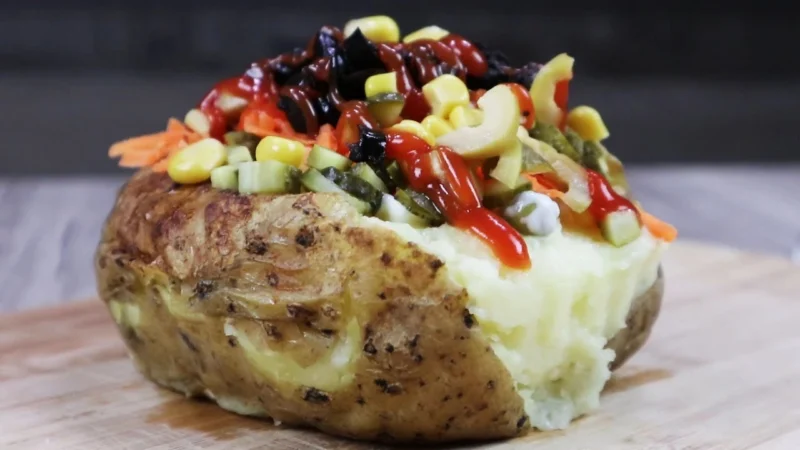
A giant baked potato, split open and mixed with melting butter and cheese, then piled high with colorful toppings — this is Turkish kumpir. Soft inside, crisp-skinned outside, and endlessly customizable, it has become one of Turkey’s most loved street foods. Locals and visitors queue up for it, especially along the Bosphorus. Beyond the satisfying flavors, kumpir tells a story of migration, adaptation, and modern urban life.
The Journey of the Potato and the Name
The potato itself started in the Americas and reached Europe centuries ago. It later arrived in the Ottoman lands during the 19th century. In some Anatolian regions, people already used words like “kumpir” or similar forms simply to mean potato. The name comes from Balkan languages — krumpir or kompir — which trace back to an old Austrian-German term, Grundbirne, meaning “ground pear.”Balkan communities brought both the word and potato traditions with them. In the late 20th century, especially after migrations from Bulgaria and the former Yugoslavia, the idea of a loaded baked potato took clearer shape in Turkey. What began as a simple roasted potato grew into something richer and more personal.
From Simple Potato to Street Food Star
The modern Turkish version of kumpir emerged in the late 1980s and early 1990s. Early commercial spots appeared in Ankara and Istanbul’s Kadıköy district. Vendors baked large potatoes until the skins turned crisp. They split them open, mashed the fluffy interior with butter and kaşar cheese, and invited customers to choose from a long list of toppings.Ortaköy in Istanbul quickly became the heart of kumpir culture. Rows of stalls lined the waterfront. Glass counters displayed corn, olives, pickles, sausages, Russian salad, peas, and sauces. People built their own combinations while looking out over the Bosphorus. From there the trend spread across Turkey and later reached Turkish communities abroad.
Cultural Importance in Everyday Turkish Life
Kumpir is more than a filling meal. It reflects Turkey’s open, mixed food culture. Balkan roots meet local tastes. The result feels both familiar and new. Its greatest strength is choice. Everyone can create a version that suits them — vegetarian, spicy, simple, or fully loaded.The dish fits city life perfectly. It is affordable, quick, and social. Friends gather around stalls late into the evening. Students and office workers grab one for lunch. Tourists discover it as a colorful introduction to Turkish street food. In Ortaköy and similar spots, eating kumpir becomes part of the experience of being in the city.The toppings themselves tell stories of abundance and creativity. What starts as a humble potato turns into a personal feast. This transformation captures something essential about Turkish hospitality: the desire to offer variety and make every person feel welcome at the table.
Why Kumpir Continues to Thrive Today
Today you find kumpir stalls and shops in almost every Turkish city. Some stick to classic toppings. Others invent new combinations. The dish has also traveled with Turkish communities to Europe and beyond, appearing in food markets and restaurants as a recognizable Turkish classic.Its lasting appeal comes from simplicity and freedom. A well-baked potato, good butter, melting cheese, and the chance to build your own plate create pure satisfaction. Kumpir connects people across generations and backgrounds. It shows how food can travel, change, and still feel completely at home. In the end, a steaming kumpir is comfort, choice, and community served in one generous portion.
Discover Traditional Turkish Recipes Discover Traditional European Recipes Burning Love” Brændende KærlighedIngredients
Instructions
- Scrub the extra-large potatoes thoroughly under running water and dry them completely with a paper towel.
- Pierce the potatoes several times with a fork or knife to allow steam to escape during baking.Wrap each potato tightly first in baking parchment paper, and then in a layer of heavy-duty aluminum foil.
- Preheat your oven to 250°C (480°F) and place the wrapped potatoes directly on the wire rack or a baking sheet.
- Bake for 75 to 90 minutes, turning them over halfway through, until a knife easily slides into the center without resistance.
- Remove the potatoes from the oven and carefully slice them open lengthwise down the center while they are steaming hot, leaving the bottom skin intact.
- Use a fork to gently mash the fluffy yellow potato flesh inside its skin, taking care not to puncture or break the bottom outer shell.
- Add 1 tablespoon of butter, half of the shredded Kashar cheese, and a pinch of salt to each potato core.
- Vigorously mix and mash the hot potato flesh with the butter and cheese until it transforms into a rich, stretchy, and completely smooth puree inside the skin.
- Spoon a generous portion of Olivier salad into the center of the creamy mashed potato base.
- Layer the warm sliced sausages in tomato sauce, sweet corn, pickled gherkins, and both black and green olives neatly over the salad.
- Drizzle ketchup and mayonnaise in a zigzag pattern across the top of the entire stuffed potato immediately before serving.
- Your traditional Kumpir is ready. Afiyet Olsun!