
The Golden Crescents of Baku: The Heritage of Azerbaijani Qutab
Few dishes showcase the rustic beauty of Azerbaijani cuisine quite like qutab. To a passing traveler, it might look like a simple stuffed flatbread. However, in Azerbaijani food culture, qutab represents an absolute national treasure. This paper-thin dough pastry dates back centuries to the nomadic traditions of the Caucasus. Eventually, it transformed from a humble shepherd’s meal into a universally loved cultural phenomenon that families regularly enjoy across the country.
A Tradition Born from the Spring Harvest
The history of this dish features a beautiful connection with nature and the changing seasons. For instance, the traditional calendar highlights the arrival of spring through the making of green qutab. Historically, families would gather wild herbs and fresh mountain greens right after the winter snows melted. They stuffed these nutritious greens into unleavened dough because they wanted to celebrate renewal and health. Consequently, making qutab became a joyous community ritual, bringing neighbors together around open-air hearths.
The Magic of the Traditional Sadj
In authentic Azerbaijani culture, people highly respect the traditional method of baking qutab. For example, true experts never use modern electric ovens or non-stick frying pans. Instead, they cook the thin dough circles on a sadj. This unique tool is a convex, circular iron griddle that sits directly over hot coals or wood fires. Because the intense, dry heat cooks the pastry in less than a minute, it perfectly seals the juices of the meat or herbs inside. As a result, the flatbread gains its iconic charred spots and authentic smoky flavor.
The Ritual of Sumac and Pomegranate
What truly sets a classic Azerbaijani qutab apart from other regional flatbreads is the specific way people consume it. Specifically, it strikes a flawless balance of savory, sweet, and sour flavors. Cooks wrap the hot, buttered flatbreads around a generous dusting of tart ground sumac. Alternatively, during the autumn months, they pack the dough with juicy, fresh pomegranate seeds. Because these sour elements cut through the richness of the meat fillings, they deliver a perfectly balanced sensory experience. Ultimately, this legendary dish invites you to slow down and savor true Azerbaijani hospitality.
Discover Traditional Azerbaijani Recipes Discover Traditional Asian Recipes You may like this also: Algerian Mahjouba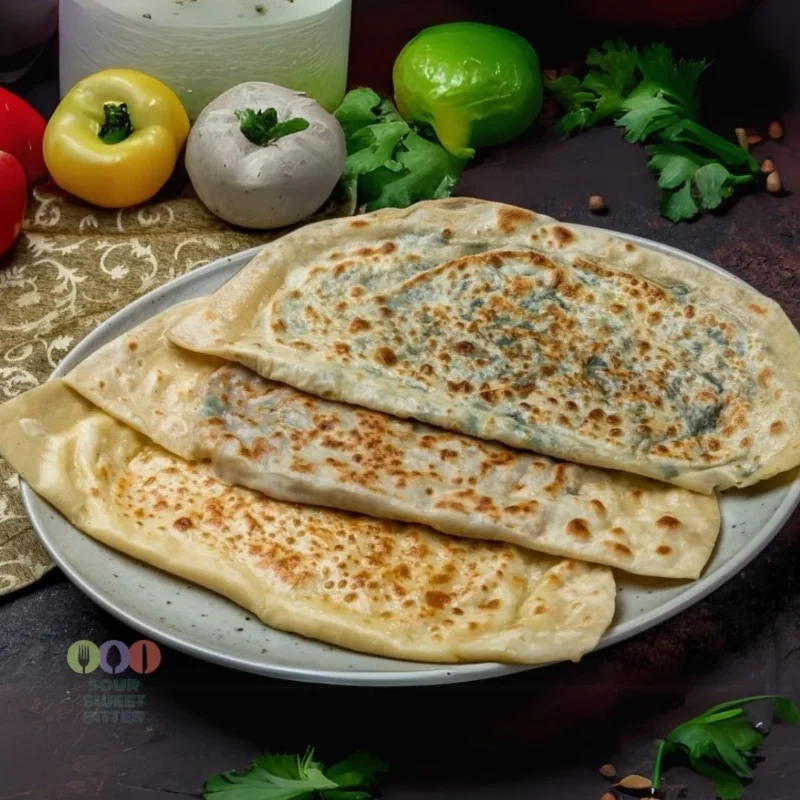
Azerbaijani Qutab
Ingredients
For the dough:
To spread the filling:
For the filling:
To rub between the kutabs and fry:
For the topping:
Instructions
- Sift the flour into a bowl, sprinkle with salt, break the egg in the middle, add water and mix with a spoon.
- Then knead the normal dough with your hands. Divide the dough into small pieces and roll them into logs.
- Cover with foil so that it does not dry out. Prepare the filling. After cleaning and washing the greens, chop them finely.
- Sprinkle salt on the chopped greens and mix well (or pour the greens over the filling and sprinkle salt). Take one of the logs, sprinkle flour and spread it thinly on the filling. Place the filling on half of the filling and spread it.
- Fold the filling in two and secure the sides. Place it on a hot griddle or on a hot plate and fry both sides.
- Prepare all the kutabs in this way. When you cook and assemble each kutab, spread butter between them, then they will be both soft and tasty.
- When serving the kutabs, reheat them using a little ghee, butter or vegetable oil. You can sprinkle sumac on top and serve with yogurt on the side.
- Your traditional Qutab is ready. Xoş iştaha!