
Sauerbraten: A Hearty German Classic with Deep Cultural Roots
German Sauerbraten is a quintessential pot roast. Indeed, it beautifully embodies Germany’s rich culinary heritage. Chefs traditionally use beef for this iconic dish, which is deeply rooted in local customs. Consequently, it remains a cornerstone of German comfort food.
The Origins: From Preservation to Royalty
First, the history of Sauerbraten dates back to Julius Caesar. Legend says he sent marinated beef over the Alps to Roman garrisons. Similarly, another tale attributes the recipe to Charlemagne in the 9th century.
Historically, people used marinating as a vital preservation technique. Vinegar and wine successfully extended the shelf life of tough cuts. Therefore, this process tenderized the meat, turning humble ingredients into a flavorful feast.
Regional Variances and Cultural Pride
Furthermore, Sauerbraten inspires great regional pride across Germany. Today, each area boasts its own unique twist on the recipe:
- Rhineland: Cooks use raisins and gingerbread to sweeten the gravy.
- Bavaria: Locals prefer a savory approach with rich lingonberry compote.
- Swabia: Chefs utilize more wine and serve it with fresh Spätzle.
A Symbol of Celebration and Community
In German culture, families rarely eat Sauerbraten as a weekday meal. Because the marinating process takes three to ten days, it symbolizes patience and tradition. Finally, home cooks host major family gatherings to serve this special Sonntagsbraten (Sunday roast).
Discover Traditional Recipes from Germany Discover Traditional European Recipes You may like this also: Moroccan Rfissa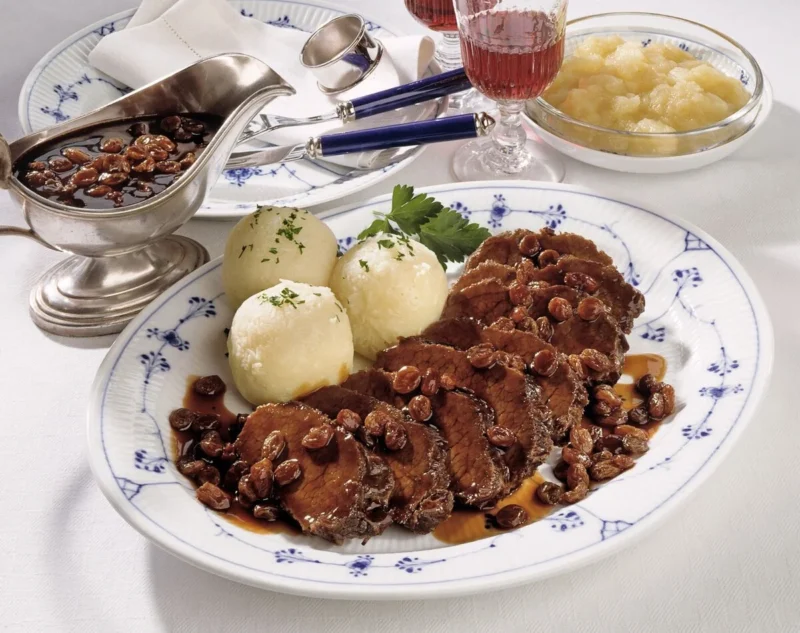
German Sauerbraten
Ingredients
For the Marinade:
For the Roast:
Instructions
Prepare the Marinade:
- In a large bowl, combine the red wine vinegar, red wine, water, onions, carrots, bay leaves, cloves, peppercorns, juniper berries (if using), sugar, and salt. Stir until well combined.
Marinate the Beef:
- Place the beef roast in a non-metallic container or large Ziploc bag. Pour the marinade over the meat, ensuring it is fully covered. Cover and refrigerate for 3-5 days, turning the meat occasionally to ensure even marination.
Cook the Sauerbraten:
- After marinating, remove the beef from the marinade and pat it dry with paper towels. Strain the marinade, keeping the liquid and the vegetables separate.
- Heat oil in a large pot or Dutch oven over medium-high heat. Sear the beef on all sides until browned, about 4-5 minutes per side.
- Add the strained marinade liquid and vegetables to the pot. Bring to a simmer, then reduce the heat to low. Cover and simmer gently for 2.5 to 3 hours, or until the meat is tender.
Make the Sauce:
- Once the beef is tender, remove it from the pot and set it aside. Strain the cooking liquid, discarding the solids, and return the liquid to the pot.
- Add the raisins and brown sugar to the pot. Simmer the liquid for 10-15 minutes.
- To thicken the sauce, whisk together the flour and a little water to form a smooth paste. Stir it into the simmering sauce, continuing to stir until the sauce thickens. You can also add crushed gingerbread or gingersnap cookies for extra flavor and texture.
Serve:
- Slice the beef and serve it with the sauce poured over the top. Sauerbraten is traditionally served with potato dumplings (Kartoffelklöße) or boiled potatoes and red cabbage.
Your traditional Sauerbraten is ready. Guten Appetit!