
The Crowning Jewel of Dim Sum: The Cultural Art of Chinese Siu Mai
Walk into any bustling teahouse in Guangdong or Hong Kong, and you will instantly notice a beautiful, rhythmic chaos. Among the towering stacks of bamboo steamers, one specific delicacy always stands out: Siu Mai. With its distinct open-topped design and bright orange garnish, this pleated dumpling represents far more than a quick bite. It acts as a cornerstone of Cantonese culinary identity. Over the centuries, it successfully journeyed from a humble Silk Road travelers’ snack into a globally celebrated masterpiece of Chinese gastronomy.
From Silk Road Teahouses to Morning Rituals
The historical roots of this open dumpling trace back to the ancient teahouses of the Silk Road in Inner Mongolia. Originally, merchants needed a satisfying accompaniment to enjoy during their long travels. Teahouses began serving these small bites alongside hot pots of tea, giving birth to the world-famous concept of “Yum Cha” (drinking tea). As the recipe traveled south to Canton, Southern chefs refined the dough and fillings. Consequently, they transformed a heavy northern snack into a delicate morning luxury that millions now enjoy as a weekend family ritual.
The Poetry of the Open Pleat
Unlike traditional Chinese dumplings that chefs completely seal to trap juices, Siu Mai proudly shows off its rich fillings. In Cantonese food philosophy, this open-top design carries deep cultural meaning. It symbolizes openness, transparency, and a welcoming spirit toward guests. Master chefs craft each dumpling by hand, creating delicate pleats that look like the petals of a blooming flower. Because they wrap the thin egg dough snugly around succulent pork, shrimp, and earthy mushrooms, the dumpling retains a firm yet incredibly juicy texture that delights the palate.
A Global Ambassador of Chinese Culinary Pride
In modern food culture, Siu Mai serves as the ultimate benchmark for evaluating a dim sum chef’s true skill. A flawless dumpling requires the perfect balance of fresh ingredients, delicate seasoning, and flawless steaming time. Chefs traditionally finish the top with a vibrant dot of orange crab roe or diced carrot to bring good fortune and joy to the table. This elegant visual contrast makes it an unforgettable center of any festive gathering. Ultimately, this steaming masterpiece invites you to slow down, practice the art of mindfulness, and share a piece of living Chinese history.
Discover Traditional Recipes from China Discover Traditional Asian Recipes You may like this also: Czech Dumplings Houskové Knedlíky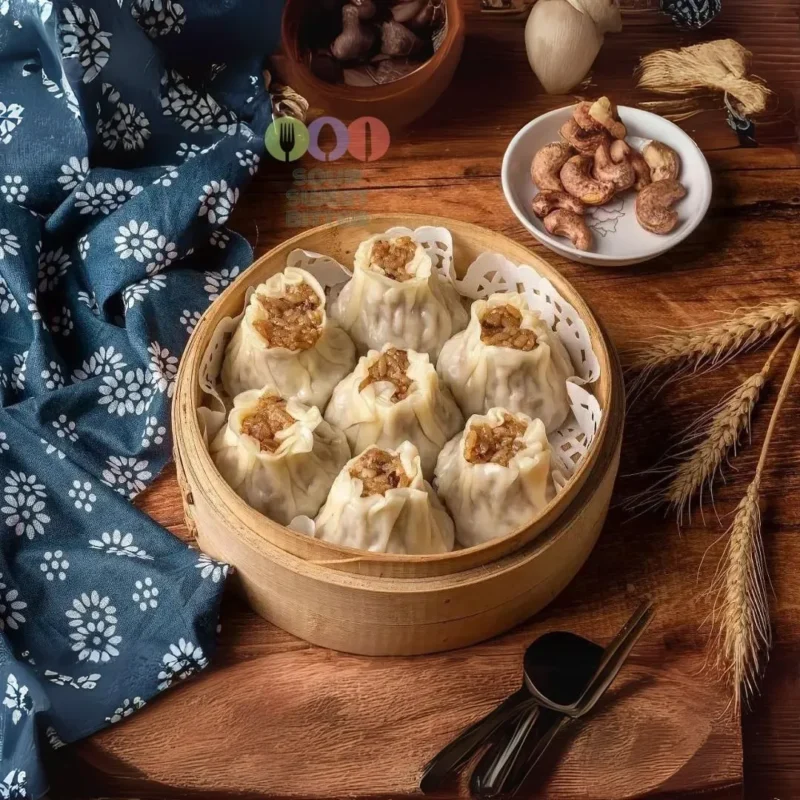
Chinese Siu Mai
Ingredients
For the Filling:
For the Dumplings:
Instructions
Prepare the Filling:
- Combine the ground pork, shrimp, and chopped shiitake mushrooms in a large bowl.
- Add the soy sauce, oyster sauce, Shaoxing wine, sugar, sesame oil, white pepper, cornstarch, and salt.
- Mix well until the filling is sticky and fully combined.
Assemble the Siu Mai:
- Place a wonton wrapper in your hand and add about 1 tablespoon of the filling to the center.
- Gather the edges of the wrapper around the filling and gently press, leaving the top open.
- Optionally, place a small piece of carrot or fish roe on top for decoration.
- Repeat until all the filling and wrappers are used.
Steam the Dumplings:
- Line a bamboo or metal steamer with parchment paper or cabbage leaves.
- Place the siu mai in the steamer, leaving some space between them.
- Steam over boiling water for 8-10 minutes until the filling is cooked through.
Serve:
- Serve hot with soy sauce or a chili dipping sauce.
Your homemade Siu Mai is ready. Màn màn chī!