


Stollen: A Timeless German Christmas Tradition
When winter arrives in Europe and Christmas lights glow, the scent of Stollen fills German homes and markets. This festive bread, dusted with powdered sugar, is more than a sweet indulgence—it carries centuries of history and meaning.
Origins in Dresden
Stollen first appeared in Dresden during the 15th century. Bakers created a plain Advent bread with flour, yeast, and water. Because the church banned butter and milk during fasting, the loaf tasted simple and symbolic.
In 1490, Pope Innocent VIII issued the famous “Butter Letter.” With this decree, bakers gained permission to use butter and milk. As a result, Stollen transformed into a rich bread filled with raisins, candied peel, almonds, and marzipan. Over time, it became the centerpiece of Christmas feasts.
Symbolism and Meaning
Stollen tells a story through its shape and coating. The thick layer of powdered sugar recalls snowy German winters. Many also see it as a symbol of the Christ Child wrapped in swaddling clothes. Families slice the loaf carefully and share it with guests, turning each piece into a gesture of generosity.
Dresden’s Stollen Festival
Every December, Dresden celebrates its baking heritage with the Stollenfest. A giant loaf rides through the streets on a horse‑drawn carriage. Bakers in traditional dress cut it with a massive silver knife. Thousands of visitors gather to taste the bread, reinforcing Stollen’s role as a communal treasure.
Stollen Across the World
German families abroad bake Stollen to preserve their traditions. Bakeries from London to New York sell it as a seasonal specialty. Variations appear everywhere—some loaves hide marzipan, others feature nuts or poppy seeds. Yet the essence remains the same: a festive bread that connects people to centuries of Christmas celebration.
How People Enjoy Stollen
Stollen is served in thick slices with mulled wine, hot chocolate, or coffee. Families wrap it in festive paper and gift it to neighbors. For many, the first bite signals the true beginning of the holiday season.
Discover Traditional Recipes from Germany Discover Traditional Recipes from Europe 🎄 See More Christmas Recipes 🎄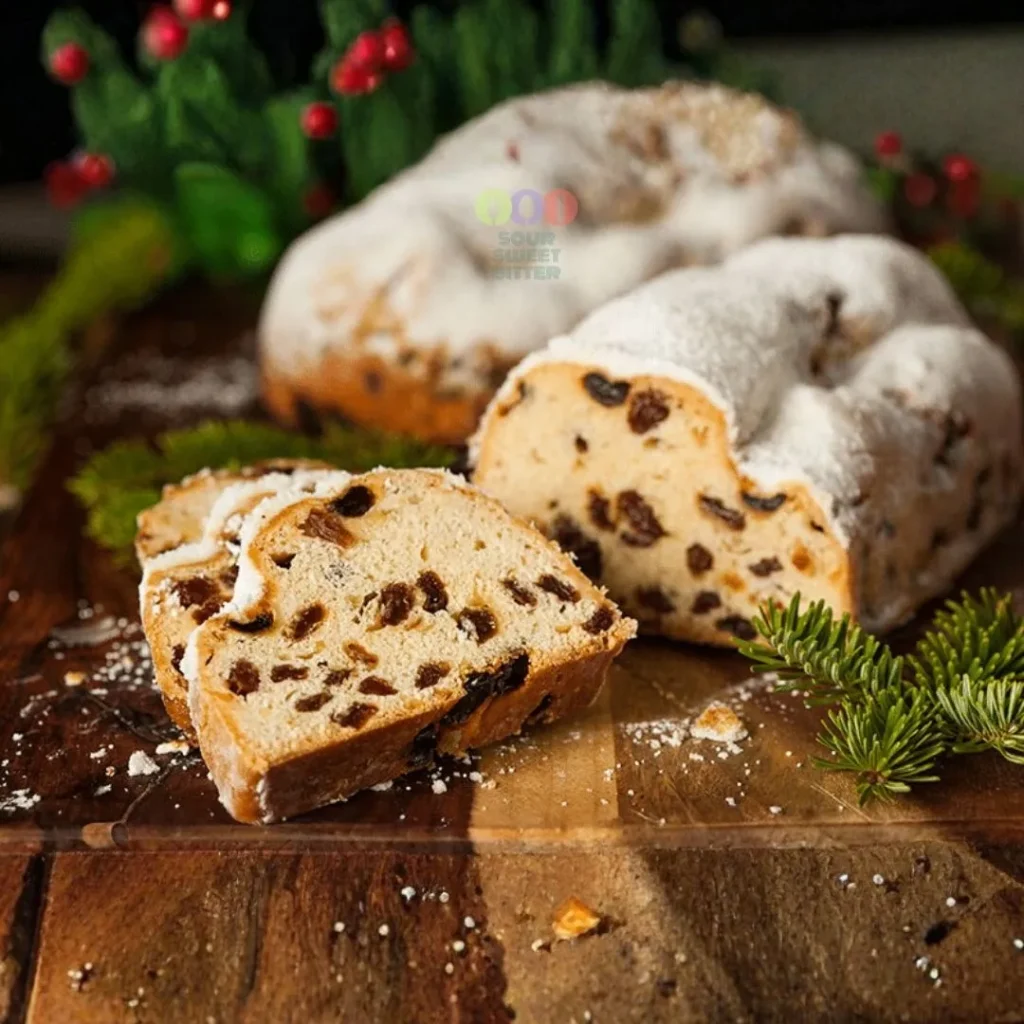
Ingredients
For the Stollen:





For brushing:
Instructions
Mix the raisins with the candied orange peel, candied lemon peel, and almonds, and pour over the juice.
-
Cover and let soak overnight; however, an hour will suffice while you prepare the dough.
-
Crumble the yeast into the lukewarm milk. Add a teaspoon of sugar and stir until the yeast has dissolved.
-
Place the flour and the remaining sugar in a large mixing bowl. Make a deep well in the center and pour in the yeast mixture.
-
Cover with a kitchen towel and let stand in a warm place for 10 minutes.
-
Cut the marzipan into very small pieces.
-
Add it to the mixing bowl along with the softened butter, eggs, and spices. Briefly mix everything together, then knead for about 5 minutes.
-
The dough should pull away from the sides of the bowl.
-
Cover the dough and let it rise in a warm place for at least 30 minutes.
-
Then knead in the dried fruit mixture and let it rise again in a warm place for 1.5 hours.
-
Shape one very large or two smaller stollen (see tip).
-
If using a stollen baking pan (approx. 33 cm), place the dough in it before the second rising time.
-
Place the stollen on a baking sheet lined with parchment paper. You can further decorate the stollen shape with your hands if desired.
-
Because the stollen tends to become wider and flatter without a pan, you can limit its size on the baking sheet by using, for example, double-folded aluminum foil or placing a loaf pan against one side.
-
Let the stollen rise again, covered, for half an hour.
-
Preheat the oven to 190 degrees with the top and bottom heating elements on.
-
Bake the stollen for 10 minutes, then reduce the temperature to 170 degrees Celsius and bake for another 40 minutes on the second rack from the bottom. Cover towards the end if it starts to get too dark.
-
Melt the butter. Remove the finished stollen from the oven and discard any burnt raisins. While still hot, brush the stollen several times with the melted butter.
-
Sprinkle with the regular sugar. Let it cool completely, then remove any excess sugar with a spoon or similar utensil.
-
Finally, sift the powdered sugar over the top.
-
Your traditional Christmas Stollen is ready. Guten Appetit!
Note
Notes
Alternative ingredients: Candied orange and lemon peel have only a very subtle flavor. If you prefer to omit them entirely, you can use more raisins and/or cranberries instead.
Shaping the Stollen: First, roll out the dough on a lightly floured work surface into a rectangle with rounded corners. Fold one of the long sides over the other in the middle, covering about two-thirds of the dough. Press the seams firmly with your fingers.
Storage: The Stollen is best stored well wrapped in aluminum foil in a cool, dry place. It should rest for two to three days before slicing.