
The Floating Pearls of Family Unity: The Cultural Soul of Tang Yuan
Watch a colorful bowl of tang yuan simmer in a pot of hot water, and you will witness a beautiful visual metaphor for human connection. To an outsider visiting a night market, these sweet rice balls might look like a simple chewy dessert. However, in Chinese cultural philosophy, this delicate treat represents the ultimate emotional anchor for families. Crafted specifically to celebrate the Lantern Festival and the Winter Solstice, this sweet dish gracefully bridges the gap between ancient lunar calendars and modern family gatherings across the world.
A Language of Perfect Circles and Togetherness
The true depth of this sweet dessert lies within a clever linguistic connection. For instance, the very sound of the name tang yuan closely mirrors the traditional Chinese word “tuanyuan.” This crucial term directly translates to “reunion” or “togetherness.” Because the round shape of the glutinous rice balls perfectly mimics the glowing full moon, it carries deep spiritual meaning. Consequently, eating a bowl with your relatives signifies an unbreakable family circle. As a result, the dish became a mandatory holiday ritual to ensure harmony and peace for the household.
The Liquid Alchemy of the Sweet Broth
In authentic Chinese culinary traditions, people highly respect the contrast between the filling and the surrounding liquid. A true bowl of tang yuan must never feel overwhelmingly heavy or cloying. Instead, master cooks knead premium sticky rice flour into a soft, pillowy dough that floats gracefully in the pot. They pack the core with rich black sesame paste, crushed peanuts, or sweet red bean paste. Because these dense fillings dissolve beautifully upon the first bite, they release a wave of nutty flavor into the clear, ginger-infused hot broth.
A Calming Comfort for the Coldest Nights
In modern daily life, preparing tang yuan remains a deeply intimate family activity that brings multiple generations into the kitchen. Grandparents and children stand side-by-side to roll the soft dough balls by hand before dropping them into boiling water. While modern commercial shops now introduce contemporary flavors like chocolate or matcha, the classic black sesame version retains its cultural crown. It proves that simple comfort foods possess the power to preserve heritage. Ultimately, this sweet masterpiece invites you to slow down, enjoy the warm steam, and share a legendary story with the people you love most.
Discover Traditional Recipes from China Discover Traditional Asian Recipes You may like this also: Iranian Faloodeh
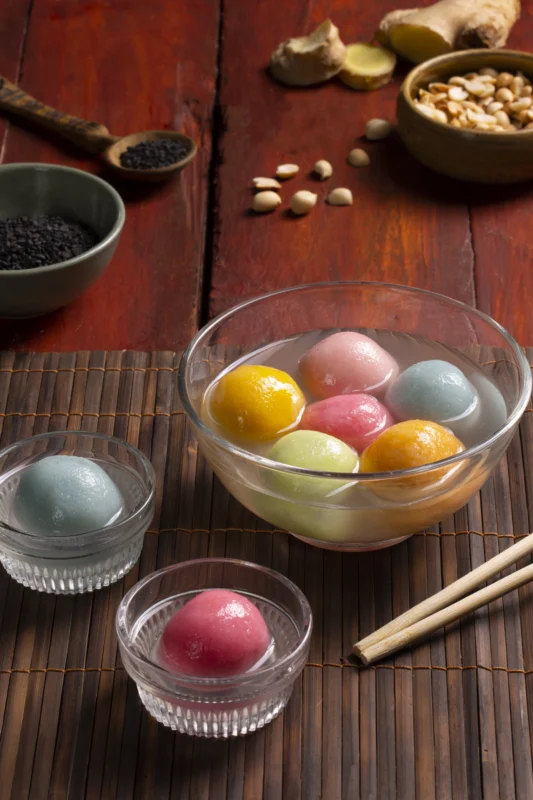
Chinese Tang Yuan (Glutinous Rice Balls)
Ingredients
For Sweet Soup
Instructions
Put the pre-soaked red beans in a pot, add enough water to cover and boil until soft. Put the pre-soaked red beans in a pot, add enough water to cover and boil until soft. Meanwhile, steam the sweet potatoes until soft.
Put the boiled potatoes on a deep plate. Mash them with a blender or a suitable tool and mix. Add the glutinous rice flour. Divide the dough according to the number of colors you will make. Add the ingredients you will use for coloring (red beans, black sesame powder, red yeast powder, green tea powder or any other coloring ingredient you like) to each piece of dough and mix until you get a soft dough.
You can also use pureed colored fruits for coloring (passion fruit, kiwi, etc.) After preparing the dough, pour the pureed fruit through a strainer and pour the juice over the dough and knead.Boil water in a saucepan. Put the colored dough that you have shaped into rounds into the boiling water. Boil until they start to float on the surface of the water. Floating means they are cooked. Remove the cooked balls to a serving plate with the help of a strainer.
Instruction of Sweet Soup
For the sweet soup, put all the ingredients from the sweet soup section in a saucepan. Heat until boiling. Turn off the heat when the sugar is completely dissolved.
Put the colored tang yuan balls you prepared for serving in a bowl. Pour some of the sweet soup you have prepared over them. Tang Yuan is ready. Bon Appetit!



User Reviews
really interesting recipe i’ll try this