
The Crispy Rhythm of Streetside Woks: The Art of Chinese Cong You Bing
Follow the rich smell of toasted sesame oil through any lively morning market in Shanghai or Taipei, and you will inevitably find a crowd waiting for Cong You Bing. Far removed from the delicate sweetness of Western pancakes, this savory, flaky flatbread represents a masterclass in texture. It stands as a glorious testament to China’s northern wheat-cooking traditions. Over hundreds of years, it evolved from a quick breakfast for working farmers into an absolute staple of Asian street food culture, loved worldwide for its shattering crunch and aromatic warmth.
The Architectural Magic of the Coiled Dough
The true secret behind this beloved flatbread lies in its unique, coiled structure. In Chinese baking philosophy, creating a great Cong You Bing is almost like a beautiful form of architecture. For instance, bakers never just knead the green scallions directly into a flat piece of dough. Instead, they roll the seasoned dough into a paper-thin sheet, brush it with rich lard or oil, and scatter the fresh greens on top. They then roll it into a tight rope and twist it into a snail-like spiral before flattening it again. Because this rolling technique creates hundreds of microscopic layers, it delivers an incredible internal flakiness.
A Perfect Symphony of Sound and Flavor
In authentic Chinese street culture, people judge a premium scallion pancake primarily through their ears. A proper Cong You Bing must never feel heavy, doughy, or unpleasantly soft. Instead, when the vendor cuts it on the hot cast-iron griddle, it should make a loud, shattering sound. The intense heat fries the outer layers to a deep golden brown while the hidden green onions steam gently inside the dough. Consequently, this fast cooking process caramelizes the natural sugars of the scallions. As a result, it creates a perfect contrast between the crispy exterior and the tender, juicy interior.
The Universal Language of Comfort Food
In modern daily life, Cong You Bing acts as the ultimate comforting bridge across generations and social classes. Business executives in tailored suits and school children regularly stand side-by-side in long lines to grab one wrapped in brown paper. While it utilizes incredibly humble ingredients like flour, water, and oil, its complex preparation reflects deep culinary pride. It proves that simplicity, when executed with historical precision, can easily rival the most expensive delicacies. Ultimately, this crispy masterpiece invites you to slow down, listen to the sizzle of the griddle, and experience a genuine piece of Chinese street life.
Discover Traditional Recipes from China Discover Traditional Asian Recipes You may like this also: Turkish Bazlama
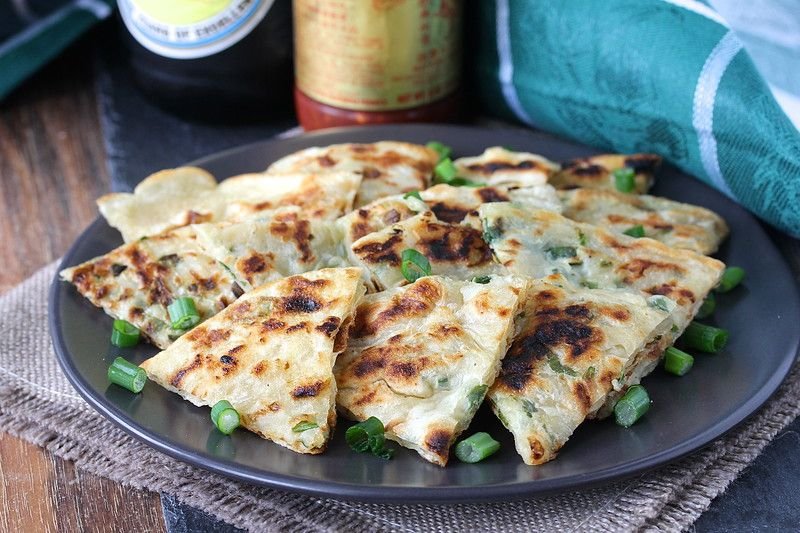
Chinese Flatbread Cong You Bing
Ingredients
Instructions
Hamurun yapılışı
Mix flour and hot water and knead well. Obtain a dough that is close to soft but not sticky.
Cover the dough with stretch film in an airtight manner. Let it rest for about 15 minutes.
At the end of the time, knead again until your dough becomes smooth and leave it to rest.
Prepare Stuffing
Chop the green onions.
Mix fats and oils, spices and salt in a bowl until smooth. Melt the solid oils and add them.
Lightly flour the counter and roll out your dough using a rolling pin or rolling pin. Apply the oil mixture you prepared onto the rolled out dough using a brush. Sprinkle the chopped green onions on the dough.
Starting from one end, roll the dough and roll it into a roll. Cut it into 4 equal parts with a knife. Take one of the pieces and flatten it by gently pressing it with your fingers. Roll it out using a rolling pin.
Place your flatbread in a pre-heated pan with a lid on high heat. To get the perfect texture, crispy but not dry, reduce the heat to medium after placing the dough in the pan. Close the lid.
Flip your pancake when one side becomes golden brown. 3-4 minutes is enough for each face to become red.
You can serve your cooked flatbreads after keeping them on the wire rack for a while to prevent dough from forming. Bon appetit!