
The Golden Crown of Egyptian Sweets: The Epic Heritage of Umm Ali
Few desserts carry as much dramatic history as the legendary Egyptian Umm Ali. To a modern diner, it might look like a rich, comforting bread pudding. However, in Egyptian food culture, this golden baked dessert represents a monumental historical milestone. Dating back to the 13th century Mamluk era, it serves as the ultimate national dessert of Egypt. Eventually, it transformed from a grand victory celebration dish into a universal symbol of warmth, family bonding, and Arabian hospitality.
A Legend Born from Royalty and Rivalry
The history of Umm Ali features a highly fascinating and dramatic royal legend. For instance, the name itself literally translates to “Mother of Ali.” According to historical records, she was the first wife of the Sultan of Egypt. When a fierce political rivalry ended in the sultanate, Umm Ali wanted to celebrate the victory with the entire country. Consequently, she ordered her chefs to mix everything available in the royal pantry. They combined flaky pastry, fresh milk, sugar, nuts, and raisins. As a result, they distributed this magnificent sweet treat to the citizens of Cairo.
The Perfect Balance of Cream and Crunch
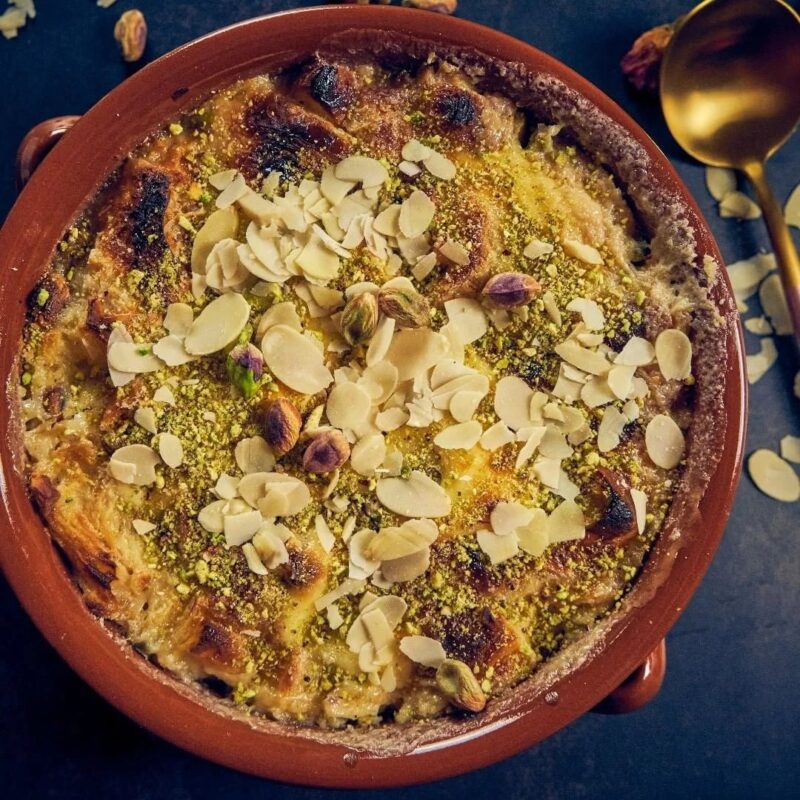
In Middle Eastern culinary culture, people highly respect Umm Ali for its luxurious contrast of textures. A traditional recipe never allows the pastry to become completely soggy or heavy. Instead, the top layer must develop a beautifully caramelized, golden-brown crust under the broiler. Inside, the puff pastry absorbs the hot, sweetened milk infused with fragrant vanilla or rosewater. Because cooks pack the layers with crispy pistachios, flaked coconut, and juicy raisins, it delivers an incredible sensory experience in every spoonful.
The Ultimate Comfort Food of Egyptian Gatherings
In modern Egyptian life, Umm Ali serves as the star of major celebrations and family gatherings. For this reason, you will always find it at the center of the table during Ramadan feasts and traditional weddings. While it relies on simple pantry staples, its rich flavor reflects pure festive luxury. It proves that centuries-old historical recipes can remain timeless and comforting on the modern table. Ultimately, this baked masterpiece invites you to slow down, embrace Egyptian heritage, and share a legendary story with your loved ones.
Discover Traditional Egyptian Recipes Discover Traditional Recipes from Africa You may like this also: British Apple Pie
Ingredients
Instructions
Cut the bread or the ingredients you will use (see description) into small pieces or divide them with your hands. Spread the bread on a baking tray lined with baking paper.
Melt the butter. Pour the melted butter over the bread on the tray with the help of a spoon. Throw the bread into the preheated 200 degree oven. Leave it in the oven for 10 minutes.
In a large bowl, mix 1 box of cream and 1 pack of vanilla with a whisk. Thin the mixture by first whisking it with a few tablespoons of milk. Add 4 cups of milk and continue mixing until you get a homogeneous mixture. Finally add 6 tablespoons of sugar and mix again.
Divide the baked bread into soufflé bowls or other heat-resistant bowls. Place the bowls back on the baking tray. Sprinkle 1 teaspoon of raisins and 1 teaspoon of coconut on the bread.
Share the creamy milk mixture you prepared over the bowls. Place it back in the oven preheated to 200 degrees and bake for 10 minutes.
Meanwhile, in a bowl, beat 1 box of cream with 5-6 tablespoons of milk to thin it. At the end of the time, share this mixture on the bread bowls you took out of the oven. Place the bowls back in the oven and bake until golden brown.
Decorate the bowls that come out of the oven as you wish. The most harmonious flavor to decorate will be with nuts and dried fruits.
You can consume your dessert warm or cold according to preference. Bon Appetit!