



Crni Rižot Recipe (Authentic Croatian Black Risotto) with Squid Ink
Discover the dramatic flavors of the Adriatic with this Crni Rižot recipe, also known as Croatian black risotto. This iconic traditional Croatian seafood dish from the Dalmatian coast gets its signature deep black color and rich umami taste from cuttlefish or squid ink. Popular in coastal towns and family gatherings, Crni rižot (or crni rizot) perfectly represents Dalmatian coast cuisine. In this guide, you’ll learn everything about how to make Crni rižot, its history, pro tips for the perfect creamy texture, wine pairings, and answers to frequently asked questions. Whether you’re looking for an authentic Crni rižot, the best Crni rižot recipe, or a delicious seafood risotto with squid ink, this page covers it all. It’s naturally pescetarian-friendly and a must-try for seafood lovers.
What is Crni Rižot? History and Origin of Croatian Black Risotto
Crni rižot, literally meaning “black risotto,” is one of the most beloved dishes along Croatia’s Dalmatian coast. Unlike the creamy Italian risottos many people know, the Croatian version highlights fresh seafood — especially cuttlefish — and its natural ink, which gives the dish an intense briny flavor and striking black appearance.The roots of this dish trace back to the time when Venice ruled parts of the Dalmatian coast (14th–17th centuries). Venetian influence brought risotto techniques to the region, but local fishermen adapted it using abundant Adriatic cuttlefish and squid. In coastal communities, nothing from the sea was wasted — the ink that serves as a defense mechanism for the animal became the star ingredient for color and taste.The blacker the risotto, the more authentic it is considered in many Dalmatian kitchens. Cuttlefish is traditionally preferred over squid because it provides more ink and a slightly milder flavor, though both work well. This traditional Croatian seafood dish is often served in family konobas (taverns) and at special occasions, celebrating the connection between the sea and Croatian culinary heritage.
Crni Rižot vs Italian Risotto – Key Differences
While both use short-grain rice like Arborio or Carnaroli, Croatian black risotto tends to be less creamy and more broth-forward compared to classic Italian risotto. The focus here is on the bold seafood flavor from cuttlefish and ink rather than heavy butter or cheese (cheese is rarely added to seafood risottos in Croatia). The ink not only colors the rice but also adds a unique savory depth rich in natural glutamic acid.
Pro Tips & Common Mistakes for Perfect Crni Rižot
- The secret to a beautiful black color is using enough ink. The more ink, the deeper and more authentic the color becomes.
- Cook the seafood properly: Cuttlefish or squid can turn rubbery if not handled right — either cook it quickly or slowly until tender.
- Add hot stock gradually while stirring frequently for the best texture. Never dump all the liquid at once.
- Choose the right rice: Short-grain risotto rice (Arborio or Carnaroli) is essential. Long-grain rice will not give the desired creaminess.
- Taste and adjust ink amount carefully — too little makes the color pale, too much can make it slightly bitter.
- Fresh cuttlefish is ideal, but frozen or ready-to-use squid ink sachets are convenient alternatives available in many markets.
Wine Pairing for Crni Rižot
This intense, briny seafood dish pairs beautifully with crisp, mineral-driven white wines from Croatia’s coastal regions. Recommended options include:
- Pošip (especially from Korčula)
- Grk
- Malvazija Istarska (from Istria)
- Dry Chardonnay or Sauvignon Blanc
A light, dry white wine cuts through the richness of the ink and seafood perfectly. Avoid heavy reds or overly oaky whites.H2: Variations of Croatian Black RisottoWhile the classic version focuses on cuttlefish, many cooks add other seafood such as shrimp, mussels, or calamari for a mixed seafood risotto. Some modern twists include a lighter version with less ink or a combination of black and white risotto on the same plate. For a pescetarian-friendly meal, it already fits naturally as it contains no meat.
Frequently Asked Questions (FAQ)
- What is the difference between squid and cuttlefish in Crni rižot?
Cuttlefish is traditionally preferred because it releases more ink and has a slightly milder flavor. Squid works well as a substitute and is easier to find in many places. - Can I make Crni rižot without squid ink?
You can, but the dish will lose its signature black color and some of the briny depth. Ready-to-use squid or cuttlefish ink sachets are the easiest alternative if fresh ink sacs are unavailable. - Is black risotto spicy?
No, traditional Crni rižot is not spicy. It gets its bold taste from the seafood and ink rather than chili or spices.How long does leftover Crni rižot last?
Store it in the refrigerator for up to 1-2 days. When reheating, add a splash of stock or water to restore the creamy texture. - Can I make a vegan version of Crni rižot?
Yes, by using vegetable stock and seaweed-based or other plant-derived “ink” alternatives, though it won’t be fully authentic. - Is Crni rižot the same as Spanish arroz negro?
They are similar but different. Croatian Crni rižot is a risotto-style dish influenced by Venetian cooking, while Spanish arroz negro is closer to paella.
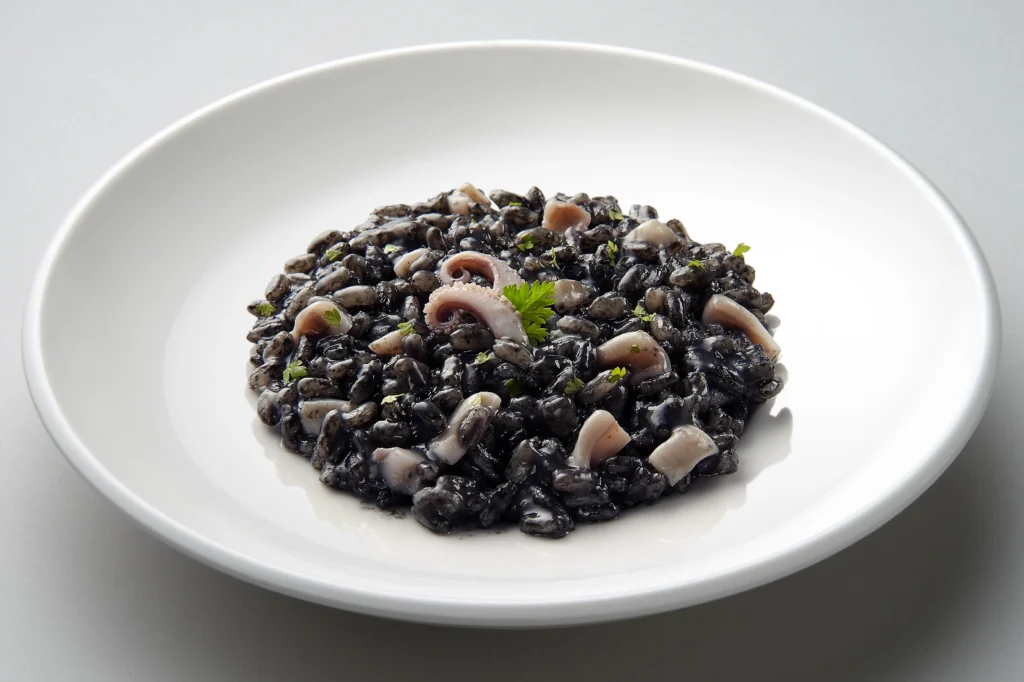
Croatian Crni Rižot | Black Risotto
Ingredients






Instructions
Clean the cuttlefish, remove the bone, remove the skin, and save the bag with the ink. Wash the cuttlefish meat and finely chop it.
-
Fry the finely chopped onion in oil, add the crushed garlic, the prepared cuttlefish, and simmer for about 10 minutes.
Deglaze with wine, add seasoned salt, bay leaf, and simmer for about 30 minutes.
-
Towards the end, add the ink, chopped parsley, and half-cooked rice.