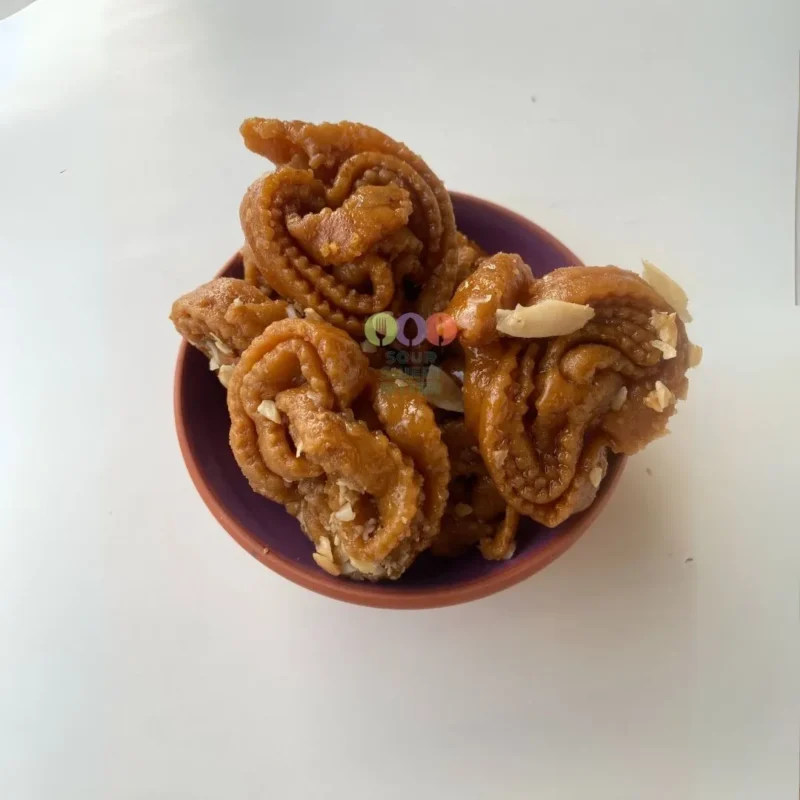

Moroccan Chebakia: A Timeless Delight for All Senses
Tracing the Sweet Legacy
Chebakia’s story begins in the folds of history, blending influences from the Andalusian era with Morocco’s vibrant culinary traditions. Passed down through generations, it embodies the spirit of innovation, cultural exchange, and enduring love for handcrafted sweets. Each golden flower-like pastry tells the tale of Morocco’s connection to its past.
A Ramadan Staple with Symbolic Roots
More than just a dessert, chebakia is a cornerstone of Ramadan rituals. As families break their fast, the pairing of chebakia with harira soup creates a harmonious blend of textures and flavors. The honey’s sweetness and sesame’s earthiness reflect prosperity and blessings—symbolic gestures cherished during the holy month.
Culinary Artistry Behind Chebakia’s Folds
Chebakia’s intricate preparation transforms simple ingredients into culinary masterpieces. Imagine soft dough, infused with saffron, cinnamon, and anise, being folded into delicate floral shapes. As they sizzle in hot oil, the kitchen fills with their enticing aroma before they’re bathed in honey infused with orange blossom water—a true sensory experience.
The Sweet Bond of Tradition
Preparing chebakia is more than a recipe; it’s an experience that knits families together. Moroccan households gather in unison, sharing laughter and stories while meticulously shaping each pastry. The process itself becomes a cherished family tradition, ensuring the preservation of cultural heritage.
A Fusion of Flavor and Nutritional Value
Chebakia may feel indulgent, but its ingredients come with nutritional benefits. Sesame seeds provide essential minerals and antioxidants, while honey offers energy and healing properties. Combined, they form a dessert that sustains and rejuvenates during long fasting hours, particularly during Ramadan.
Chebakia: A Journey Through Moroccan Culture
Whether it’s the aroma of orange blossom wafting through bustling streets or the warmth of shared moments at celebratory feasts, chebakia connects people to Morocco’s heritage and traditions. It’s more than food—it’s a reflection of Morocco’s heart and soul.
Discover Traditional Moroccan Recipes Discover Traditional Recipes from Africa You may also like this: Algerian JalebiIngredients
Instructions
- Steep the pure saffron threads in the warm water and orange blossom water mixture for 15 minutes to release its rich aroma and yellow color.
- Sift the flour into a large traditional clay mixing bowl. Combine it with the ground aniseed, fennel seed, cinnamon, baking powder, crushed mastic gum, and salt.
- Incorporate the smooth ground sesame paste and finely powdered almonds into the dry spiced flour.
- Rub the mixture vigorously between your hands until it develops a uniformly sandy, fine texture.
- Pour the melted clarified butter, vegetable oil, olive oil, vinegar, egg yolk, and the strained saffron liquid into the sandy mixture.
- Knead the dough powerfully by hand for 10 minutes until it forms a uniform, dense, stiff, and completely non-sticky dough.
- Cut the dough into 4 equal blocks. Shape each block into a smooth roll, wrap them tightly in plastic film, and let them rest for 15 minutes.
- Roll out each portion with a rolling pin into a thin sheet. Fold it inward like an envelope, re-wrap it, and let it rest for another 5 minutes to create flaky interior layers.
- Roll out the folded dough again until it is humanly possible to get it extremely thin (about 1.5 mm thickness). Use a fluted pastry wheel cutter to trim edges into large rectangles, then cut those into smaller 8x8 cm squares.
- Inside each square, make 4 parallel vertical cuts without cutting through the outer perimeter, resulting in 5 attached strips. Slip your index finger under strips 1, 3, and 5. Join and pinch the two outermost bottom corners tightly behind your finger. Pull that pinched corner gently up and through the center of the strips to turn it inside out, creating an open rose/flower shape. Pinch the side tips firmly to lock the form.
- Arrange the woven flowers on a large dry tray and leave them uncovered for 20 minutes to dry out. This sets the shape so they do not open up when frying.
- Heat the honey in a wide pot over low heat until fluid and frothy, then turn off the flame.
- Heat a deep layer of vegetable oil in a deep skillet over medium heat. Fry the chebakia in batches for about 3-4 minutes, carefully turning them over, until uniformly golden-amber.
- Use a slotted spoon to lift the hot pastries straight from the frying oil and submerge them directly into the warm honey pot. Let them soak for 5-6 minutes to absorb the honey deeply.
- Lift carefully out of the honey with a clean strainer, transfer to a colander to drain excess syrup, and sprinkle the centers immediately with extra toasted sesame seeds.
- Let cool completely before serving.
- Your traditional Chebakia is ready. شهية طيبة!